Common Aquarium Algae Problems and How to Fix Them
Almost every aquarium owner deals with algae at some point. The mistake is thinking algae always means the tank is failing. In reality, algae is usually a signal. It tells you there is extra light, extra nutrients, unstable maintenance, or an imbalance between plants, fish waste, and the system’s overall maturity.
For most home aquariums and small-office tanks in the USA, the right response is not to panic and dump in chemicals. The better move is to identify the type of algae, understand why it is showing up, and then correct the conditions that are feeding it. Some algae is mostly cosmetic. Some points to a bigger husbandry issue. Some can be fixed in a week. Some takes patience.
This guide explains the most common aquarium algae problems, what causes them, and the practical fixes that actually work in real tanks.
Aquarium Algae at a Glance
| Algae Type | What It Looks Like | Most Common Cause | Best First Fix |
|---|---|---|---|
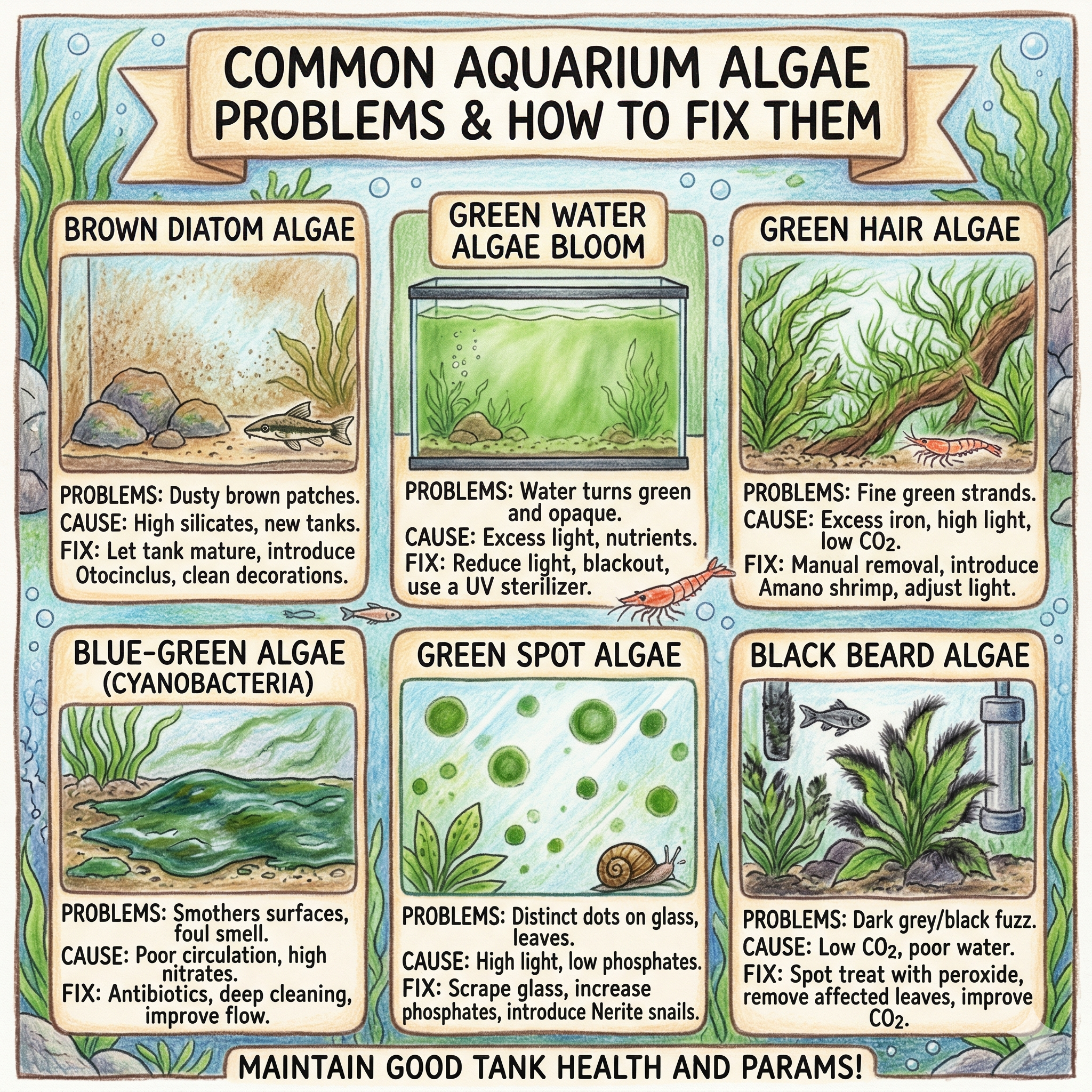
| Brown algae | Dusty brown film on glass, decor, and leaves | New tank instability, low light, excess silicates | Wipe it off, improve maintenance, give the tank time to mature |
| Green spot algae | Hard green dots on glass and slow-growing leaves | Strong light, inconsistent nutrients, older leaves | Scrape glass, shorten lighting, improve overall balance |
| Green hair algae | Soft green strands or fuzzy growth on plants and decor | Too much light, excess nutrients, unstable CO2 in planted tanks | Reduce light duration and manually remove as much as possible |
| Black beard algae | Dark tufts on leaves, wood, filter outlets, and decor | Inconsistent flow, unstable carbon balance, dirty system areas | Prune affected leaves, clean equipment, improve flow consistency |
| Green water | Water turns cloudy green | Free-floating algae from excess light and nutrient imbalance | Short blackout, reduced light, and better maintenance control |
| Cyanobacteria | Slimy blue-green or dark green sheets with odor | Dirty low-flow zones, excess organics, unstable maintenance | Remove manually, improve flow, clean substrate, and reduce waste buildup |
Why Algae Shows Up in the First Place
Algae usually grows when one or more of these conditions are true:
- the light is too intense or runs too long
- the tank has excess nutrients from overfeeding, overcrowding, or skipped maintenance
- plants are not using available nutrients efficiently
- flow is poor and debris collects in dead spots
- the aquarium is still new and biologically immature
That means algae control is not just about “killing algae.” It is about making the tank less favorable for algae while more favorable for fish, plants, and stable water quality.
The Most Common Aquarium Algae Problems
1. Brown Algae
Brown algae is one of the most common issues in brand-new aquariums. It usually appears as a dusty brown coating on glass, substrate, decor, heater tubes, filter pipes, and plant leaves.
Why it happens
- the aquarium is still maturing
- beneficial bacteria populations are still stabilizing
- silicates may be present in the water source or substrate
- the tank has low light and weak plant growth
Good news
Brown algae is usually one of the easier problems to outgrow. Many beginner tanks see it during the early weeks, then see it fade as the tank stabilizes.
How to fix it
- wipe it from glass during routine maintenance
- gently clean affected decor
- vacuum loose buildup from the substrate
- keep water changes consistent
- avoid overfeeding while the tank is still new
What not to do
Do not overreact to brown algae in a cycling or newly established tank. If fish are safe and water parameters are stable, patience is part of the solution.
2. Green Spot Algae
Green spot algae looks like hard green dots on the glass, rocks, and older plant leaves. It often resists simple wiping and may require a blade or scraper on the glass.
Why it happens
- lighting is strong for the plant load in the tank
- the photo period is too long
- slow-growing plants are catching the brunt of the imbalance
- tank maintenance is inconsistent
How to fix it
- shorten lighting to around 6 to 8 hours while correcting the problem
- scrape the glass clean rather than leaving old spots in place
- remove heavily affected old leaves if needed
- keep water changes on schedule
- avoid letting nutrients and detritus drift upward from skipped cleaning
Best prevention
Strong lighting only works when the rest of the tank can support it. If the aquarium is lightly planted, heavily stocked, or maintained inconsistently, very bright light often creates more problems than benefits.
3. Green Hair Algae
Green hair algae is one of the most recognizable algae problems. It grows in soft green threads or fuzz on plant leaves, wood, rock, and sometimes even equipment.
Why it happens
- light runs too long
- feeding is too heavy for the tank size
- plant growth is weak or stalled
- nutrients are available faster than the system is using them
How to fix it
- manually pull out as much as possible by hand or with a toothbrush
- reduce lighting duration and avoid all-day schedules
- improve weekly maintenance consistency
- check whether the tank is overstocked or overfed
- prune badly affected plant leaves so the tank is not constantly reseeding itself
Important note for planted tanks
If plants are struggling while hair algae is thriving, the real issue is usually not “lack of algae control.” It is that algae is winning the resource competition. That means you need better stability, not random bottled treatments.
4. Black Beard Algae
Black beard algae is a stubborn dark algae that often forms short tufts on plant edges, driftwood, rocks, filter outlets, and high-flow equipment areas.
Why it happens
- flow is inconsistent or poorly distributed
- debris accumulates in the tank
- plant health is weak
- the tank’s carbon and nutrient balance is unstable
Why hobbyists hate it
Black beard algae is hard to remove by casual cleaning. Once it anchors to leaves or decor, it tends to stay until the affected material is cleaned aggressively or removed.
How to fix it
- prune leaves that are heavily covered
- deep-clean hardscape and equipment during maintenance
- clean filter media correctly so flow does not weaken
- improve circulation to dead zones
- keep the maintenance schedule more consistent for several weeks in a row
What not to rely on
Spot treatments can help in some tanks, but they do not replace fixing the root cause. If the tank stays dirty or unstable, black beard algae usually returns.
5. Green Water
Green water turns the whole aquarium cloudy and green. Unlike algae that grows on surfaces, this is free-floating algae in the water column.
Why it happens
- too much direct or excessive artificial light
- nutrient-rich water with poor balance
- unstable new setups
- missed maintenance in heavily stocked tanks
How to fix it
- reduce light exposure immediately
- keep the tank away from direct sun
- perform consistent water changes rather than random giant interventions
- use a short blackout when appropriate
- feed lightly during recovery
Recovery expectation
Green water can clear surprisingly fast when the light and nutrient imbalance is corrected, but if the original cause remains, it often comes back.
6. Cyanobacteria
Cyanobacteria is often called blue-green algae, but it is not true algae. It usually appears as a slimy sheet over substrate, rocks, decor, or plant surfaces and may have a foul smell.
Why it happens
- organic waste builds up in the tank
- low-flow zones trap debris
- maintenance has slipped
- substrate areas are not being cleaned well enough
Why it matters
Cyanobacteria spreads quickly and can smother plants, make the tank look terrible, and signal that the aquarium is running too dirty in certain areas.
How to fix it
- manually remove as much as possible
- siphon the substrate carefully
- improve circulation in stagnant areas
- reduce feeding if waste buildup is obvious
- keep the tank cleaner week after week instead of relying on one big reset
How to Diagnose the Real Cause Instead of Guessing
When algae appears, ask these questions:
- Has the lighting schedule become too long?
- Has feeding crept upward?
- Has maintenance become inconsistent?
- Is the tank new and still maturing?
- Are plants healthy, or are they stalled and losing the competition?
- Are there low-flow dirty zones in the tank?
Most algae problems can be traced to one or two of those factors.
The Best Practical Algae-Control Plan for Most Home Tanks
For most beginner-friendly aquariums, the best control plan looks like this:
- keep lights on a timer
- limit most tanks to a reasonable daily photo period
- avoid overfeeding
- vacuum waste and remove detritus routinely
- clean glass and decor before algae becomes heavy
- do regular water changes instead of sporadic massive ones
- avoid overstocking
- keep filters clean enough to maintain stable flow
This is not glamorous advice, but it works better than chasing miracle cures.
Algae Eaters Can Help, But They Are Not the Fix
Many owners look for a fish, shrimp, or snail that will solve the problem for them. Cleanup animals can help, but they are support tools, not a substitute for good husbandry.
Helpful support options in the right tank
- nerite snails for glass and some film algae
- amano shrimp for certain soft algae in compatible tanks
- otocinclus in mature planted systems
What to remember
- they still produce waste
- they cannot outwork a major imbalance
- they are not appropriate for every tank or stocking plan
If the tank is overloaded with algae, the system problem still needs to be corrected first.
Common Mistakes That Make Algae Worse
- leaving lights on 10 to 12 hours every day
- putting the tank near direct sun
- overfeeding because the fish always look hungry
- skipping maintenance until the tank looks bad
- adding more fish when the system is already unstable
- relying on chemical fixes without correcting the cause
- buying algae eaters without checking compatibility or tank size
When Algae Is Actually a Warning Sign
Algae itself is often just ugly, but it can signal bigger problems when it appears alongside:
- rising nitrate from chronic overfeeding
- dirty filter media and weak flow
- rotting plant leaves
- debris collecting in the substrate
- fish stress from poor overall maintenance
If algae is increasing while the tank also smells worse, looks dirtier, or has more stressed fish, treat it as a husbandry warning rather than a cosmetic issue.
Best Algae Fixes by Tank Situation
| Tank Situation | Most Likely Problem | Best First Response |
|---|---|---|
| Brand-new beginner tank | Brown algae or mild green film | Stay consistent with maintenance and let the tank mature |
| Low-tech planted tank with long light schedule | Hair algae or green spot algae | Reduce light duration and manually remove algae |
| Heavily stocked community tank | Green water or surface algae growth | Feed less, clean more, and keep water changes consistent |
| Tank with dead zones and dirty corners | Cyanobacteria or black beard algae | Improve circulation and remove trapped waste |
| Tank beside a window | Green water or persistent surface growth | Remove direct sunlight and reset lighting duration |
Where This Leaves You
Most aquarium algae problems are manageable without extreme interventions. The key is to identify the type correctly, then respond with better light control, better maintenance, better flow, and better feeding discipline.
If you want the shortest version: do not treat all algae the same, do not assume chemicals are the first answer, and do not ignore the husbandry imbalance that caused it. A cleaner, more stable tank almost always beats a more complicated one.
Keep moving from reading to action.
Use the related guides to go deeper, check the shop if you need matching accessories, or join the email list for new guides and product updates.
Get new guides, product updates, and practical aquarium planning notes by email without waiting to check back manually.
Use the contact page if you want direct help instead of general email updates.
Related Guides
Aquarium Filter Types Explained
Compare sponge, hang-on-back, canister, internal, and undergravel filters so you can choose the right aquarium filtration system for your tank size, fish, budget, and maintenance style. Real lessons from tanks in Norman, Oklahoma.
Aquarium Lighting Guide
Learn how to choose the right aquarium lighting for your home or office tank — intensity, spectrum, duration, timers, planted vs fish-only setups, and algae control. Real lessons from tanks in Norman, Oklahoma.
Aquascaping Basics: Creating Stunning Underwater Landscapes
Learn practical beginner aquascaping rules for home and office tanks — focal points, negative space, hardscape, plant grouping, and layouts that look intentional instead of cluttered. Real lessons from tanks in Norman, Oklahoma.